

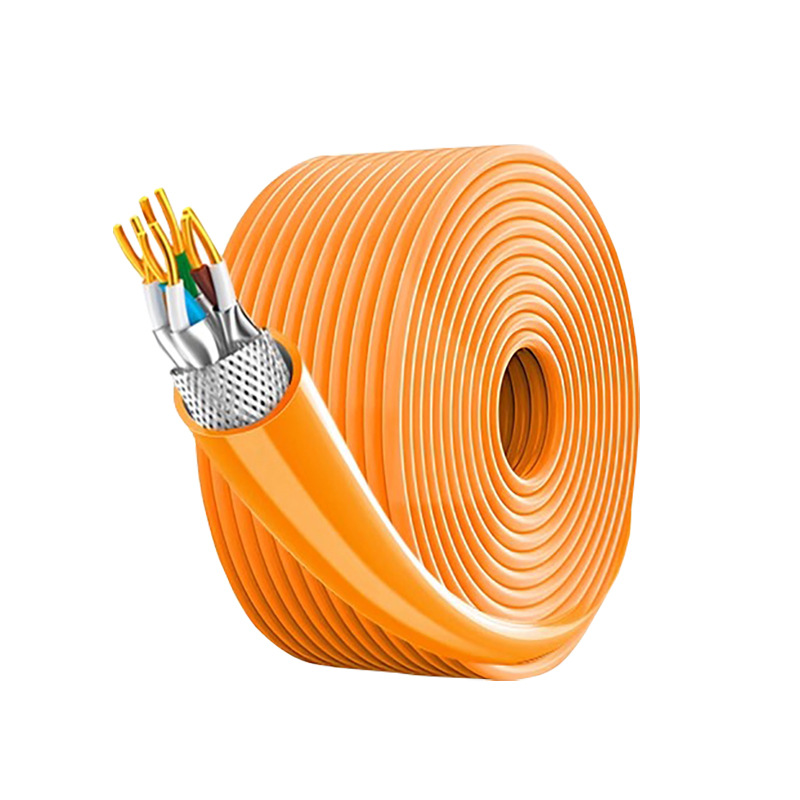
Every cabling forum has the same thread on repeat: “New build, should I wire Cat6, Cat6a, or Cat8?” The answers contradict each other, loudly. Strip the arguing down and the honest answer depends on two numbers, and neither of them is printed on the box.
The cheat sheet first:
| Cat6 | Cat6a | Cat8 | |
|---|---|---|---|
| 1 GbE @ 100 m | Yes | Yes | Yes |
| 10 GbE @ 100 m | No (55 m limit) | Yes | Yes, but only 30 m overall |
| 2.5 / 5 GbE @ 100 m | Yes | Yes | Yes |
| Typical AWG | 22–24 | 23 (thicker) | 22–23, always shielded |
| Built for | Homes, offices | Future-proofing, dense PoE | Data centers, 25/40G switch-to-switch |
| Sensible ceiling | 1–5 GbE home use | 10 GbE everywhere | You don’t have this problem |
Cat6 is still the right answer for most homes
Here’s what the upgrade-happy threads skip: the average home run is 20 to 40 meters, not 100. At those lengths, Cat6 comfortably carries 5 GbE, and 10 GbE works up to about 55 m on solid copper 23AWG. Your internet connection, even the fancy one, is almost certainly slower than any of these.
The 2.5GbE gear now standard on motherboards and mid-range routers? Cat6 handles it without breaking a sweat. You do not need to pay for “a” to watch Netflix. Our solid-copper Cat6 UTP 305 m box covers a typical house several times over.
When Cat6a earns its price
Three situations genuinely justify the roughly 30–50% premium:
- You want 10 GbE at the full 100 m distance. Cat6 gives up past 55 m; Cat6a holds 10 GbE to the full spec length.
- Dense PoE deployments. Cat6a’s thicker 23AWG conductors run cooler under PoE load. Powering a stack of Wi-Fi APs and cameras through one switch, the thermal headroom is measurable.
- The walls are open right now. Cable is cheap. Ripping walls open later is not. Builders in those same threads keep repeating one piece of advice: run Cat6a in conduit so the next upgrade is a pull, not a project (the conduit section of our outdoor cable guide applies indoors too).
For whole-building runs, our copper Cat6A/Cat7 305 m roll is the workhorse option.
Cat8: almost certainly not for you
Cat8 exists for one job: 25 and 40 GbE over short (30 m) links between switches in a rack. It is always shielded, stiff, heavier, and priced accordingly. Marketplace “Cat8” cables are frequently mislabeled Cat6a anyway, the same problem covered in our fake Cat6 guide, just wearing a more expensive costume. If a listing can’t show certification, the “8” is decorative.
A properly made pure-copper Cat8 patch cable makes sense inside the rack. As whole-room wiring, it makes no sense at all.
What actually kills network speed
In order of likelihood: Wi-Fi, then CCA patch cords (the full breakdown is in our CCA vs pure copper guide), then bad terminations, then a router from 2016. The cable category is rarely the bottleneck, which may be the most useful thing this whole debate can teach you.
Buying in volume?
IdeaLink stocks solid-copper Cat6 and Cat6a bulk cable, tested to spec, from 305 m boxes to pallets. Tell us your floor plan and we’ll tell you honestly which one you need, including when the honest answer is Cat6. Browse the full LAN cable catalog to compare gauges and pack options.