

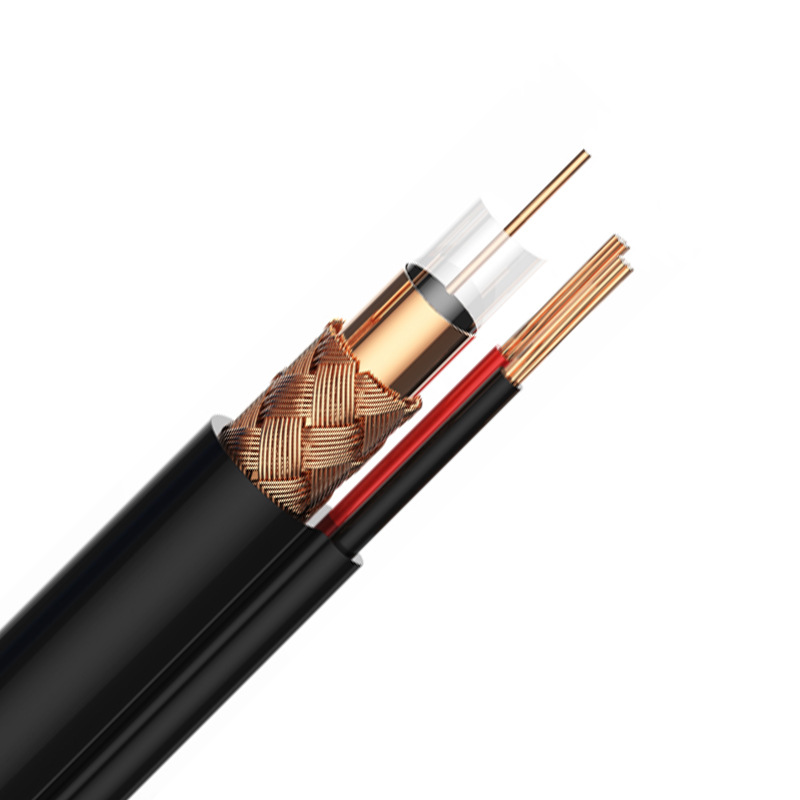
“RG59+2C Siamese CCTV Cable Flat 0.81mm CCA 128-strand shield + 0.65mm Power 305m.” Every word in that string changes the price, the picture quality, or how long the install lasts. Most listings never explain it. Here is the decoder.
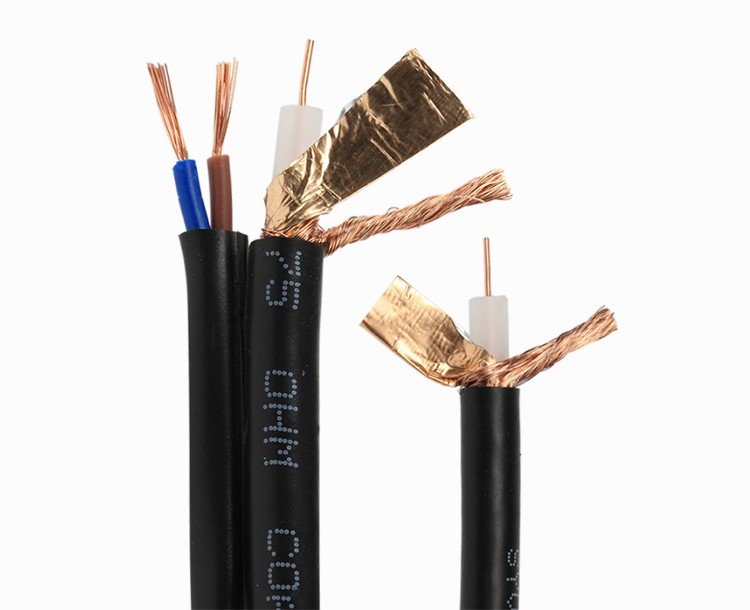
One jacket, two cables: RG59 for video, 2C for power.
One jacket, two cables
Siamese (or combo) cable runs an RG59 coax next to a 2-core power pair under one jacket. One pull per camera instead of two, which is why it dominates analog CCTV work: AHD, CVI, TVI, and older 960H systems. The two halves age differently, so you spec them separately.
The coax half
Center conductor. 0.81 mm is the classic RG59 size, about 20AWG, and solid bare copper is the reference build. CCA (copper-clad aluminum) versions run 0.5 to 0.8 mm and cost less. The tradeoff is simple: the thinner the conductor and the more aluminum inside it, the sooner a long run’s picture goes soft and snowy. For a warehouse at 250 m, copper holds; a skinny CCA may not.
Shield. You’ll see 96-strand or 128-strand bare copper braid, sometimes braid plus aluminum foil. The braid percentage is how well the cable rejects interference from power lines, fluorescent fixtures, and motors. 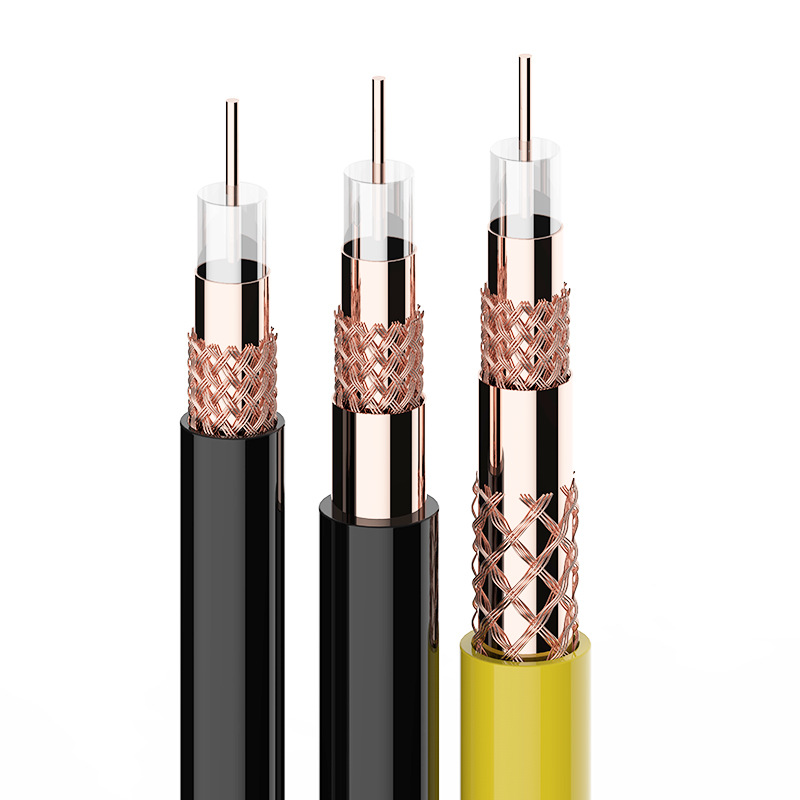 A camera run parked next to a distribution board wants braid plus foil, not the cheapest single braid on the shelf.
The power half
The 2C pair carries 12V DC (sometimes 24V) to the camera, and conductor sizes range from 0.35 mm up to 0.75 mm on common builds. Thin pair plus long run equals voltage drop, and the camera responds by dropping off at night when the IR LEDs draw peak current. The physics and failure pattern are the same ones covered in our CCA on PoE cameras article, just applied to the power pair instead of Ethernet. For runs past 50 m, step up to 0.65 mm or 0.75 mm and prefer copper over CCA on the pair.
Flat, round, or jelly-filled
 Flat builds slip through narrow trunking and under floors, which matters in retrofits where you can’t open the wall. Round builds are the default for conduit and outdoor runs. Jelly-filled (flooded) jackets add a gooey moisture barrier for buried or coastal installs where water is the enemy, not nails.
Matching the build to the job
| Build | Fits |
|---|---|
| Flat, 0.5 mm CCA, 100 m rolls | Short indoor runs: shops, homes, small offices on a budget |
| Round, 0.8 mm CCA, 96-strand braid, 305 m | The workhorse whole-building analog install |
| Round, 0.81 mm BC, 128-strand braid, 0.65–0.75 mm power | Long runs, interference-heavy sites, tenders that specify copper |
| Jelly-filled | Underground conduit, humid or coastal environments |
Our bare-copper BC build is the one we point to for long runs and copper-specified tenders; the 0.8 mm CCA with 0.7 mm power pair covers standard jobs at a lower cost. Both ship from the same RG59 catalog, clearly labeled as BC or CCA.
On CCA, honestly
CCA exists because it cuts cost, and for short indoor runs it holds up fine. What wrecks trust is mislabeling: cable sold as copper that tests as CCA loses the customer permanently. We covered the full material comparison in the CCA vs pure copper guide. If your buyer or tender says copper, ask for the test report and keep it on file.
Before you order
The sourcing side (supplier checks, payment, which variants move in which markets) is covered in the installer’s buying guide. For small jobs, pre-terminated BNC + DC extension cables skip the crimping entirely. For everything else, tell us the camera count, run lengths, and power draw, and we’ll quote the build that fits instead of the one we want to move.