


You ask two factories for Cat6 UTP 305m boxes and the quotes come back 40 percent apart. Both say Cat6, both say 24AWG, both send photos of a blue box that looks identical. The gap is almost always the conductor, and it is the one specification you cannot see in a photo.
One cable uses solid bare copper. The other uses CCA, short for copper clad aluminium: an aluminium core with a thin layer of copper bonded over it, usually 5 to 10 percent of the cross section. CCA costs less, and for some projects it does the job. For others it produces faults that surface months later, after the walls are closed and the cable is out of reach.
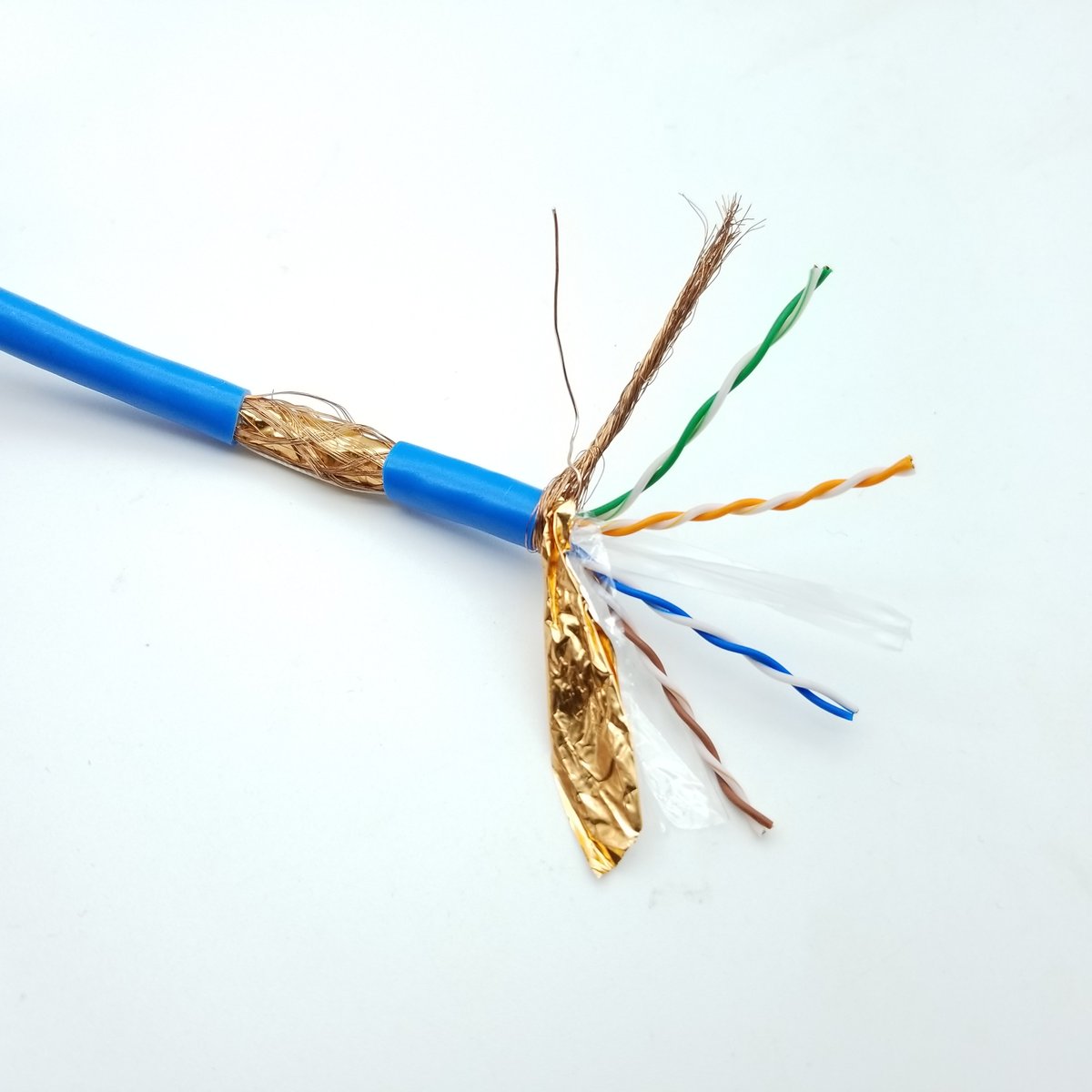
What the conductor actually changes
Resistance comes first, and most other differences follow from it. A 24AWG bare copper conductor measures about 9.4 Ω per 100 m. CCA at the same gauge measures roughly 14 to 16 Ω per 100 m, around 50 to 70 percent higher, because aluminium conducts worse than copper and the copper skin is thin.
Higher resistance means more signal loss across the same distance. A pure copper Cat6 channel holds 1 Gbps over the full 100 m that TIA/EIA-568 allows. A CCA channel is usually stable to about 50 to 60 m; past that the link can negotiate down to 100 Mbps, or drop once a connector ages or a nearby power cable adds noise.
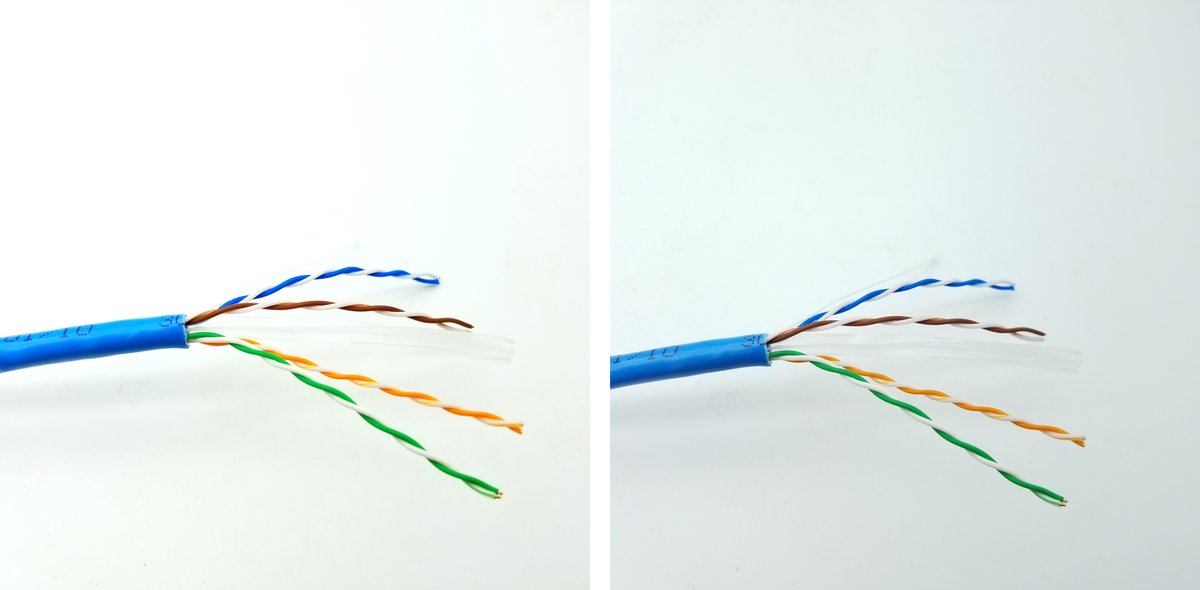
Two cables both sold as Cat6. The print on the jacket and the box they ship in look the same, and that is exactly why a photo will never tell you which conductor you are buying.
Where CCA causes real trouble: PoE
If you run PoE cameras, access points or any powered device, this is the part that matters. IEEE 802.3af and 802.3at limit the loop resistance of a pair to 25 Ω. A 100 m CCA run regularly exceeds that, so the device at the far end sees a voltage drop instead of the 48 to 57 V it expects. Cameras reboot when infrared switches on at dusk. Switch ports report overload. Equipment makers state in writing that CCA voids the warranty on PoE hardware.
Heat is the other half. Power lost in the conductor turns into heat inside the cable, and CCA loses more of it. In a bundled run above 30 W, that heat shortens jacket life.
Mechanical life
Aluminium work hardens. Bend a CCA conductor a few dozen times and it snaps where copper would survive tens of thousands of cycles. It also cold flows under the pressure of an IDC punch-down contact, so a termination that tested clean on install day can loosen a year later. Pulling tension is lower too, which shows up when you drag cable through long conduit.
CCA also corrodes where the copper meets the aluminium, and humidity speeds that up. For a project in coastal West Africa or the Gulf, weigh that before you weigh the price.
When CCA is a reasonable choice
CCA is not a counterfeit product, and it is not always the wrong answer. It suits short patch cords and desk-side connections, data-only runs with no PoE attached, budget-driven projects where the cable stays accessible and can be replaced, and markets where your buyer is explicitly buying on landed cost per metre.
We run both conductors on the same line, and for tender work in price-sensitive markets we often quote CCA first. The point is to choose it on purpose, knowing what you trade away.
When bare copper is the only sensible answer
Specify solid bare copper for PoE cameras and PoE+ / 802.3bt devices, for any run inside a wall or ceiling you cannot re-pull, for runs past 60 m, for data centres and enterprise backbones with an uptime commitment, and for any project that has to pass a TIA/EIA-568 channel test.
That last one decides a lot of tenders on its own: the standard specifies solid bare copper conductors, so CCA sold as Cat6 does not meet TIA-568.2-D. Enforcement in consumer retail is close to zero, which is why the cable is everywhere. Certified structured cabling is a different market.
LAN cables we run on this line
If you are sourcing now, these are the constructions we produce, in both CCA and solid bare copper unless noted:
- Cat6 UTP Network Cable 24AWG 4PR Indoor 305m Box: indoor Cat6 UTP, 24AWG
- Cat5e UTP Network Cable 305m Box Bulk Roll CCA or Bare Copper: Cat5e 305 m box, CCA or bare copper
- Solid Copper Cat6 SFTP Indoor Ethernet Cable 305m Box: solid copper Cat6 SFTP for PoE and noisy environments
- Cat6 FTP Ethernet Cable 24AWG 4-Pair Indoor LAN Cable 305m Box: Cat6 FTP with overall foil shield
- Cat6 UTP Outdoor Ethernet Cable 305m Double Jacket Underground: outdoor Cat6, double jacket, underground rated
- Copper Cat6A Cat7 Ethernet Cable 305m Roll for Indoor Cabling: Cat6A / Cat7 indoor cabling
- Cat7 SFTP Outdoor Ethernet Cable 23AWG 1000MHz LAN Cable 305m Box: outdoor Cat7 SFTP, 23AWG
- SFTP Armored Cat5 Outdoor LAN Cable 305m Box for Direct Burial: armoured Cat5 SFTP for direct burial
How to check what actually arrived
Four checks, none of them needing a lab:
- Cut and look. Strip a conductor and scratch the cross section. Copper is reddish-brown all the way through. CCA shows a silvery core under a thin copper skin.
- Weigh the box. Aluminium is about a third the density of copper, so a 305 m CCA box is clearly lighter than a bare copper one of the same gauge. Put two boxes side by side, or check gross weight against the datasheet.
- Measure resistance. A multimeter across a known length answers it directly. Around 9.4 Ω per 100 m per conductor means copper; 14 Ω or more means CCA.
- Apply heat. Aluminium melts far below copper. Heat a stripped conductor and the copper layer on CCA blisters and flakes off.
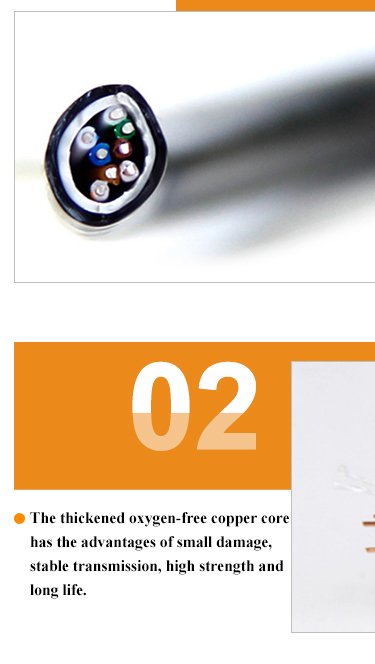

Ask for the conductor material in writing on the proforma invoice, together with the AWG and the referenced standard. A supplier who hedges on that line is telling you something.
One more variable: the metre count
Length is the other quiet gap. A box sold as 305 m should carry metre markings printed on the jacket, counting down to zero. Check that the final marking actually reaches zero, and weigh one box against another from the same batch. Two boxes that weigh differently usually hold different lengths.

What we supply
We produce both CCA and solid bare copper on the same production line, in Cat5e, Cat6, Cat6a and Cat7, indoor and outdoor, UTP / FTP / SFTP, packed in 305 m pull boxes or on wooden drums. Tell us the application, the run length, whether PoE is involved and which market you sell into, and we quote the conductor that fits the job rather than the one that looks cheapest on a comparison sheet. Samples ship before you commit to a container.
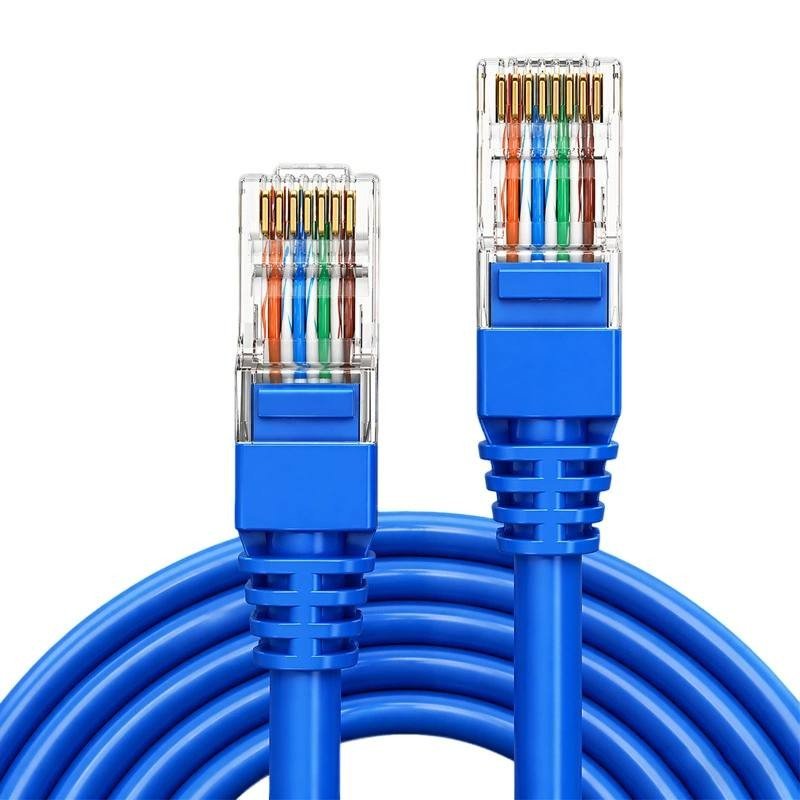
Get a quote: send your spec and quantity through our contact page or message us on WhatsApp. We come back with conductor options, lead time and packing details.
Related: already got a box in hand? Read How to Spot Fake Cat6 Cables: 5 Tests Before You Buy and verify it in ten minutes.
Related: Outdoor & Direct Burial Ethernet: A Complete Buyer’s Guide
Related: Cat6 vs Cat6a vs Cat8: Which One Actually Matters?
Related: Why Cheap CCA Cables Fail on PoE Cameras
Related: RG59 Siamese Cable Specs, Decoded